BEST PRACTICE
Weigh it
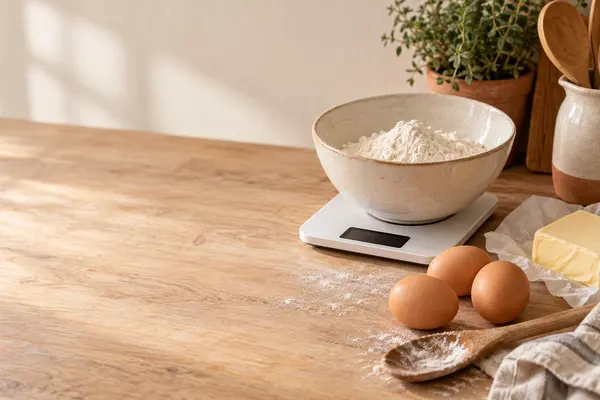
Put the bowl on the scale and measure in grams. The number does not change with how hard you packed the cup.
Why it matters
MEASURE LIKE YOU MEAN IT
GRAMS not guesses
AI-generated image, not a photograph of a real person or place.
A cup measures space. A scale measures what is actually in the bowl.
Baking is fussier than cooking, and most of the fuss is about quantities. Here is what the standards bodies say about cups, spoons, grams and eggs, plus two safety facts every home baker should know.
Plain English, with the sources linked.
THE SHORT ANSWER
Weighing is the best practice for accuracy,
according to the US measurement standards body.
BEST PRACTICE
Put the bowl on the scale and measure in grams. The number does not change with how hard you packed the cup.
Why it mattersSMALL AMOUNTS
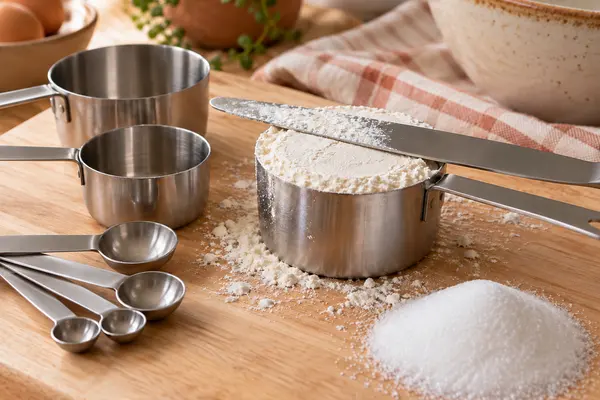
For raising agents and spices, level spoons are fine: a teaspoon is about 5 mL and a tablespoon about 15 mL.
Convert a cupKNOW YOUR INGREDIENTS
A large egg covers a 10 g range, and butter is defined by its fat. Both are worth knowing.
See the numbers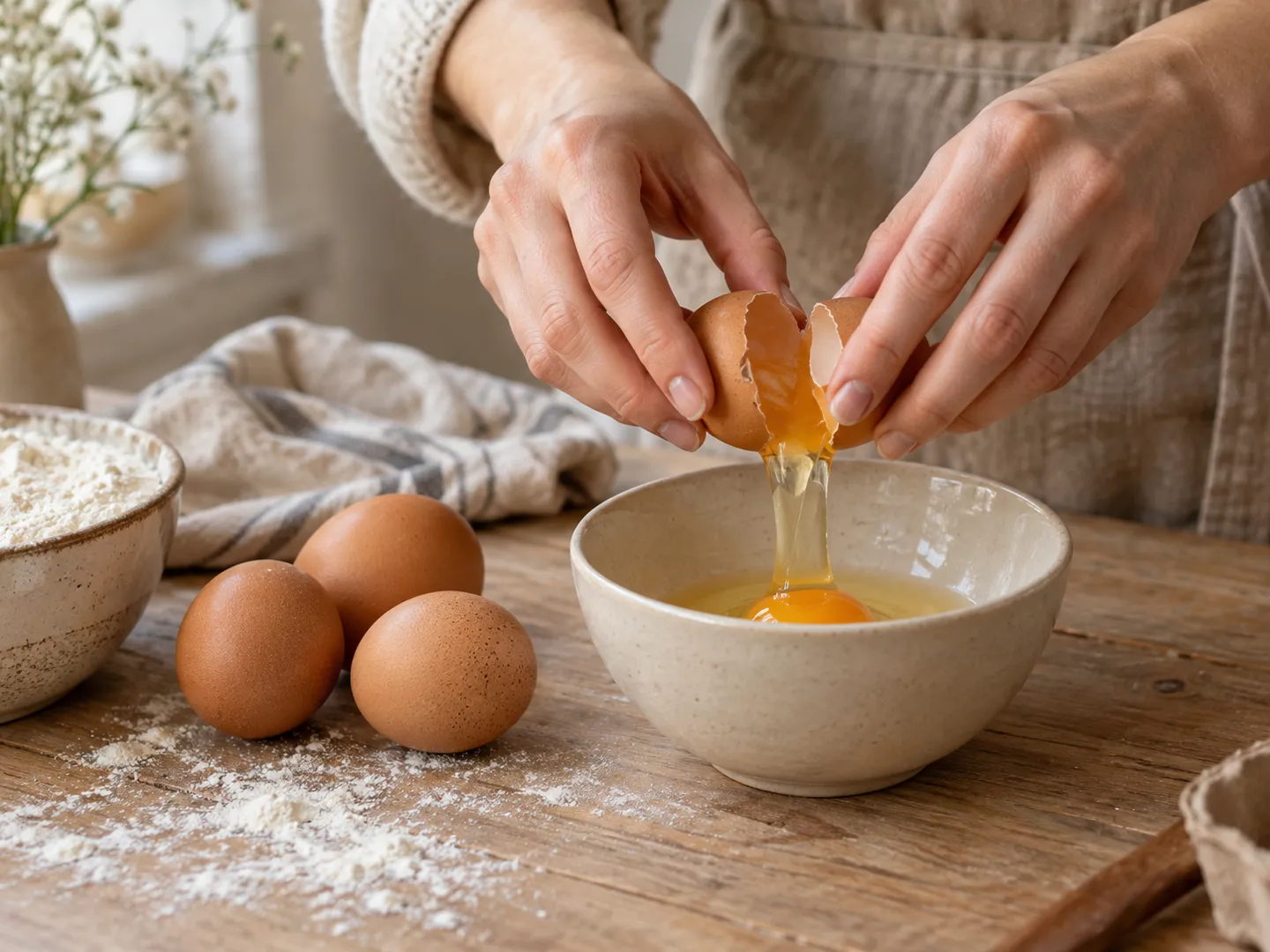
TRY IT NEXT BAKE
Put the bowl on, reset the scale to zero, add the flour, reset again, then add the sugar. One bowl, no cups to wash.
Measure a cup recipe the usual way, weigh each ingredient in grams and write the numbers in the margin for next time.
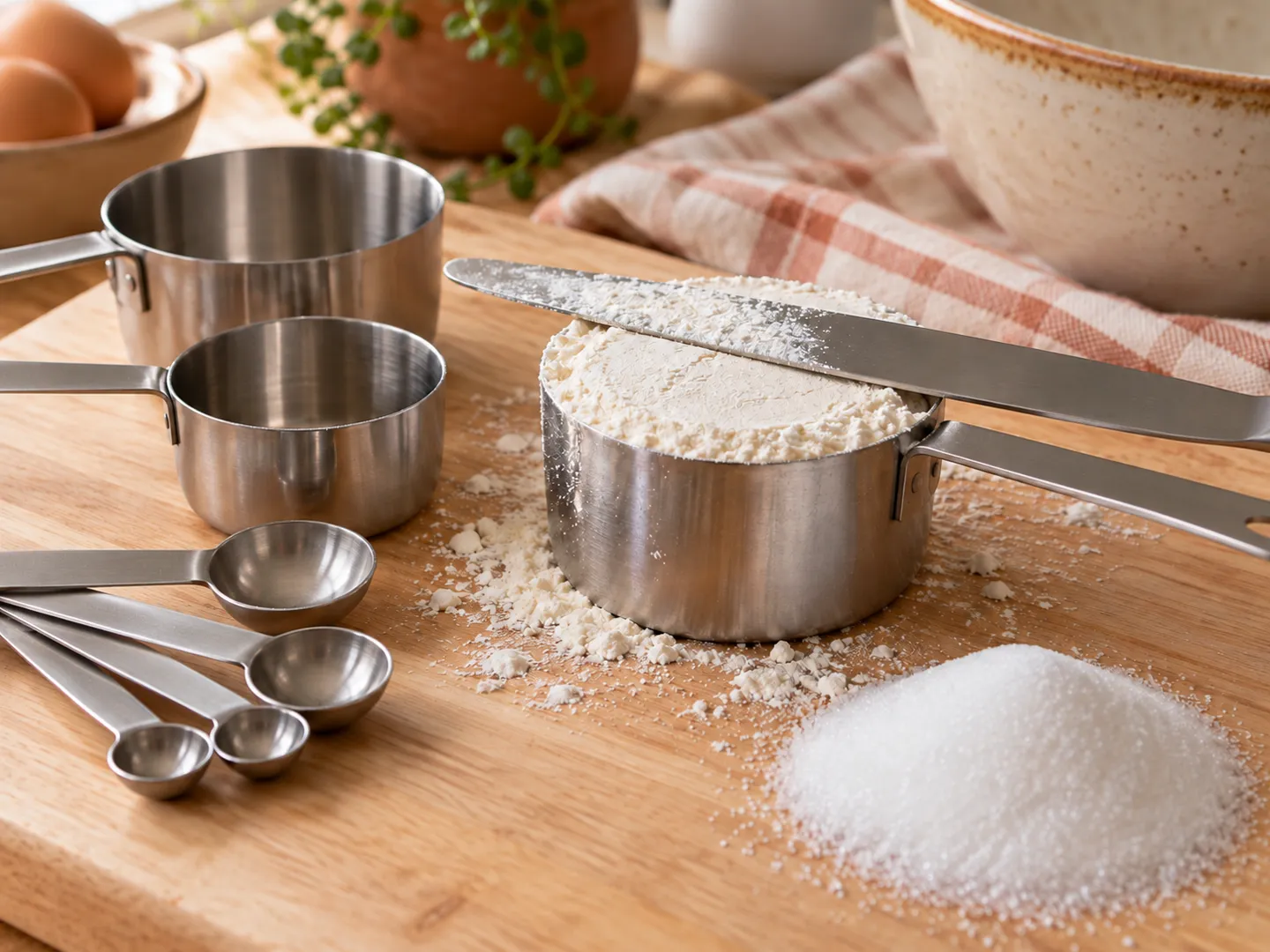
Strike off the excess from spoons and dry cups, and use a jug for liquids rather than a dry cup.
Resist the spoon of raw batter. Raw flour has been linked to outbreaks, and the CDC advises baking first.
TWO DEFINITIONS WORTH KNOWING
Eggs and butter are graded and defined in law,
which tells you how much they can vary.
63 to under 73 g
A large egg weighs
Medium is 53 g to under 63 g, very large is 73 g or more and small is under 53 g. So two "large" eggs can differ by nearly 10 g, and a recipe written for large eggs can come out differently with mediums.
EGG SIZES · UK MARKETING RULES
80% to under 90%
Milk fat in butter
To be sold as butter, the product must contain at least 80% milk fat, no more than 16% water and no more than 2% other milk solids. Spreads with less fat are a different product and can behave differently in a recipe.
BUTTER · LEGAL DEFINITION
Neither rule tells you how a recipe was tested, but both explain why weighing the egg or checking the fat content can make a bake more predictable.
A QUICK CUP CONVERTER
Pick a measure from an American-style recipe to see its approximate volume in millilitres, using the equivalents published by NIST.
These are volumes, not weights. Only for water and similar liquids does 1 mL weigh about 1 g; flour and sugar need a scale.
BAKING FACTS
NIST, the US measurement standards body, calls measuring ingredients by mass with a kitchen scale a best practice to improve recipe accuracy.
NIST names using the wrong kind of measuring cup, such as a dry cup for liquids, as a common way of introducing measurement errors.
NIST's approximate equivalents: 1 cup is 240 mL, 1 tablespoon 15 mL and 1 teaspoon 5 mL. Its tip for converting a recipe is to measure the usual way, then weigh the result in grams.
A 2016 E. coli outbreak linked to flour made 63 people ill across 24 US states, and 17 were taken to hospital. The CDC says not to taste raw dough or batter.
EFSA says acrylamide forms in starchy foods such as bread and biscuits when they are cooked above 120°C with little moisture, through the same reaction that browns them.
QUICK QUESTIONS
Short answers to the questions home bakers ask most.
Yes. The US National Institute of Standards and Technology (NIST) says measuring ingredients by mass with a kitchen scale is a best practice to improve recipe accuracy, compared with measuring by volume in cups.
NIST gives approximate equivalents of 240 mL for 1 cup, 15 mL for 1 tablespoon and 5 mL for 1 teaspoon. A quarter cup is about 60 mL and half a cup about 120 mL.
Under the egg marketing rules used in the UK, a large egg weighs at least 63 g and less than 73 g. Medium is 53 g to under 63 g, very large is 73 g or more and small is under 53 g.
The US Centers for Disease Control and Prevention (CDC) says it is not safe to taste or eat raw dough or batter made with any flour. Bake it first. A 2016 E. coli outbreak linked to flour made 63 people ill in 24 states.
The European Food Safety Authority says acrylamide forms in starchy foods cooked above 120°C with low moisture, as in baking. It notes that some countries advise: do not burn it, lightly brown it.
Each figure on this page comes from the sources below.
A NAME WORTH RISING FOR
doodlebaking.com is part of the DoodleSale portfolio. It isn't in an auction right now, but you can ask about leasing it.